

When Covid hit, the amount of time people spent out of their home (at work, shopping, socialising) dropped significantly.
Yet in the six years since Covid, that statistic has barely recovered. In fact, on average, the amount of time people spend out of their home has increased by just 11 minutes since the height of the pandemic lockdown.
The post-pandemic ‘new normal’, it seems, is staying in. Seven in ten Brits would prefer to stay in than go out, according to a recent survey. We work from home, get shopping delivered, and don’t socialise.
This is harmful for everyone, but it’s especially harmful for young people and young adults. The spaces they most rely on for socialising are not just declining in popularity, they’re disappearing.
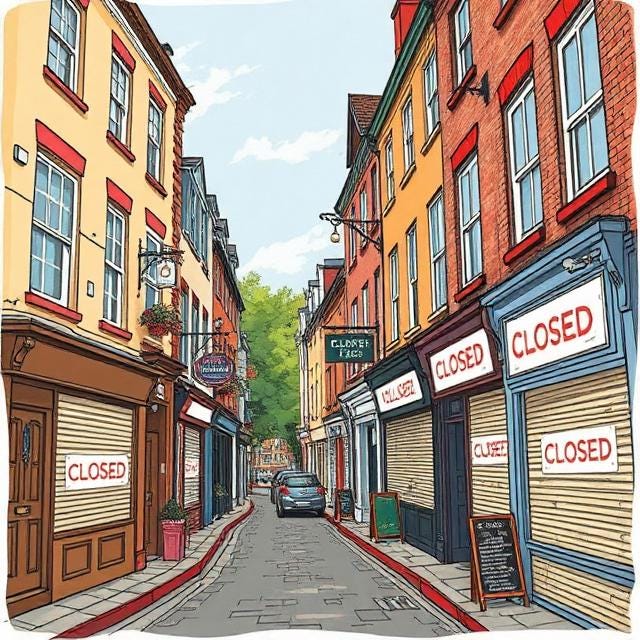
The number of cinemas has consistently declined since 2020, thousands of youth clubs have shuttered - even the number of arcades is plummeting.
Pubs and nightclubs are an endangered species: three nightclubs are closing every week, and a pub is closing every day. If trends continue, nightclubs will go extinct in 2029.
We can make assumptions about what this leads to, but we don’t really have enough data to say for sure - there’s never been a time in history that third spaces have so routinely become inaccessible to an entire generation of young people.
A lot of boomers worry it’ll lead to more crime and anti-social behaviour, with bored teenagers skateboarding through shopping centres or doing doughnuts in car parks.
But the reality is even more stark: teens and young adults are becoming losers.
Gen Loser
Two thirds of Gen Z are happy not leaving the house for days at a time. One in ten Gen Z adults have never been on a date. Only a third of young people under 25 have a driving licence - the lowest number on record.
Nearly a million young Brits (16-24) are not in work, education or training: they are just sitting around at home.
All of this can only be the result of a coterie of social media companies that are in the business of getting kids addicted to their products. Young people spend nearly all of their waking hours on phones, computers and other devices - with the digital giants working to keep them hooked.
Video games replace hanging out. Dating apps replace meeting in-person. Reddit and Discord replace forming friends. These companies have entire teams dedicated to keeping their - mainly young - users hooked: like modern-day nicotine.
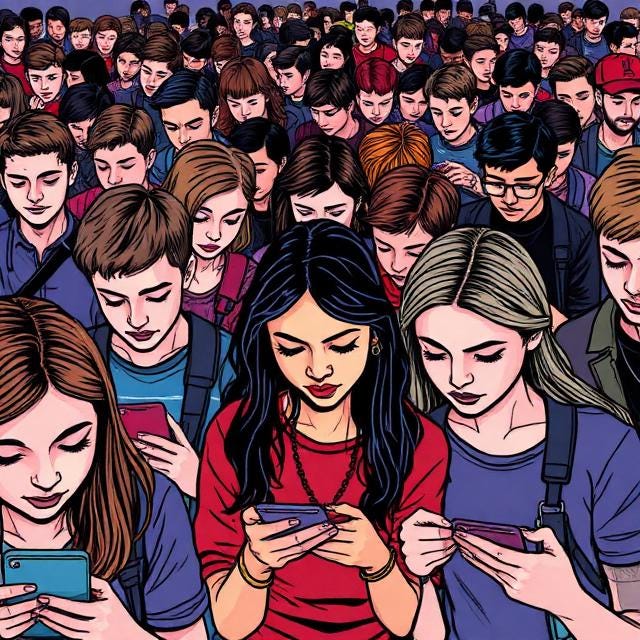
And why would anyone leave the house when they can experience the same dopamine hits from the safety of their home? There is no friction, no awkward encounters, no getting lost or rejected.
More and more, AI is even replacing human friendships. 4 out of 5 UK young adults have used an AI companion - and half of those are regular users. They are using these AI companions to curtail loneliness. One in ten young adults have had intimate or sexual interactions with AI companions.
Gen Sad
The result?
Misery.
There has never been a more mentally ill generation than Gen Z.
For decades, middle-age has been the most unhappy time of a person’s life. Now, it is late teens and early adulthood.
16- to 29-year-olds are the loneliest generation in Britain.
And when young people suffer, we all suffer. We miss out on their innovation, ideas and enterprise in the workplace. The economy misses out on their disposable income. And the population literally declines if they don’t get married and have kids.
So what do we do about it?
First, we need to recognise that the decline of the nighttime economy is a failure of social infrastructure. Government policy currently treats pubs as cash cows to be taxed and developers treat music venues as nuisances to be soundproofed and sued into silence. We’re obsessed with protecting the green belt - let’s protect our third spaces with the same force.
The reality is that a lot of young people’s socialisation happens in places like pubs and bars, and yet today a quarter of young Brits now don’t drink at all. There’s, quite rightly, a lot of talk about the dangers of alcohol and many people will celebrate the decline in drinking. But Scott Galloway makes the convincing argument that we’re often too negative about alcohol. For literal centuries, booze has helped awkward young adults lower their inhibitions, approach strangers, and form bonds. Of course excessive drinking should be discouraged, but so too should a life on the sofa.
Finally, we need to get real about one of the most corrosive forces to have hit kids in perhaps all of human history: algorithms.
I used to be convinced by the research that found no correlation between screen time and mental health. I’m now increasingly sure that these platforms, which are deliberately designed to be addictive and to alter your brain chemistry, are seriously harmful to young people.
I’m in favour of forcing the introduction of - what I call - benevolent dark patterns. For example:
The infinite timeline that is now a feature of so many platforms could be reworked to end.
Late-night scrolling could be disincentivised by reducing the quality of content after midnight.
Profiles could default to ‘private’, with additional obstacles to making them public.
All of these changes would serve to keep young adults - and all of us - safer, and reduce the addictiveness of these platforms.
And children should absolutely not be using AI companions.
This is young people’s problem but it’s not their fault. We’ve all stood by as the physical world withers while the digital world becomes ever more addictive.
But we can’t keep allowing a generation of young people to rot in their bedrooms: choosing messy reality wins every time.
I totally agree. I only hope that the next generation of parents learn to just say no. All this new information coming out about the harms of gaming, social media, screen time but unfortunately it turned out to be the perfect babysitter. We look to companies and the government to step in but really we should be pleading with new parents, don't buy them phones and tablets invest in Lego instead.
Interesting read. Well written