

Britain has a problem. We’ve come to expect American tax, but Scandinavian public services. We want tax cuts, and more money for the NHS, at the same time.
We want to shop in Lidl and get Waitrose quality.
Ask the average Briton who should foot the bill for our expensive tastes, and the answer is inevitably ‘someone else’. The uber-wealthy, or the benefit scroungers, or both.
But the harsh truth is that you could tax the rich to oblivion, and slash benefits to threadbare, and still not raise enough to pay for world-class public services.
Taxing the billionaires is not feasible. We could tax billionaires for every single penny they have and it wouldn’t even cover a tenth of our annual government spending: there are only 150 billionaires in the UK (a falling number).
And when we cut spending on benefits, we tend to see the cost absorbed elsewhere (by the NHS, or the police etc).
So who should pay? Well, I’m afraid the answer couldn’t be less popular: the middle earners, and the pensioners. Why? Because there are simply so many of them.
Middle earners
More than half of Brits think taxes are too high.
What should the government do about that? Simple - they should stop listening to us.
96% of Britons say they are a better driver than average. 36% believe in ghosts.

Guess what - nobody likes going to the dentist, or doing the dishes, or eating broccoli. You don’t abolish those things because they’re unpopular. Tax is unpopular and always will be: but it is the only way to have a functioning society.
And British middle earners are some of the lowest taxed in the world. A median earner here pays less tax than a median earner in Belgium, France, Italy, Germany, Spain, Sweden. Prior to 2025, Britons’ average workers paid the lowest rate of tax of any G7 country.
You might be surprised to learn that - when you exclude employer NI contributions - an average earner in the UK actually pays less tax than an average earning American.
In the 60s, Britain was a high-tax country compared to the rest of Europe - with tax revenues in line with Scandinavia. But over the last fifty years, while Europe built out well-funded welfare states by asking everyone to pay more, Britain fell behind. By refusing to raise taxes on workers, we are now a comparatively low-tax country.
We’ve accidentally become a low-tax country because politicians are stuck reading the opinion polls rather than the economic forecasts. Brits think taxes are too high: but they’re not. They are, by every global and historical measure, too low.
There are so many middle earners that a relatively modest increase to taxation has a significant effect. A penny on the basic rate of income tax would raise £8 billion. A penny on the top rate of tax, by comparison, would raise just a fraction of that. Taxing the rich sounds good - but the problem is it doesn’t make much money.
We don’t have to do this by directly raising taxes. We can continue to let fiscal drag do the work for us: keeping the tax brackets and personal allowance where they are while more people move into those tax classes. That acts as a less painful, but de facto increase in the real rate of tax.
(If I really wanted to be controversial, I’d point to the self-employed and one person businesses as another group that needs to pay more tax. The system is already structured in such a way that they pay substantially less tax than regularly employed workers - about 55% less. But it’s also fairly obvious that there is widespread fiddling of the numbers. The government is missing about £59.2 billion in taxes a year, and estimates more than 60% of that missing money is sitting with - not the tax-dodging giants everyone expects - but SMEs and self-employed people.)
Raising taxes is one side of the coin. The deal with workers must be that we pay more tax, but get better services. And for high-functioning public services, we must also cut spending. There is one obvious place to look.
Pensioners
The cost of the state pension is £140 billion a year. To put that into perspective, we could apply a 100% wealth tax to every single billionaire in the country - and it’d cover our pension payments for just a few years.
Paying pensions is the single largest line item on the government’s bill, more than double what we spend on defence, more than what we spend on education, transport. We could host the 2012 Olympics every single month, every year, forever - and it’d still cost less than pensions. We could build more than 100 millennium domes a year. We could have a space programme that puts a man on the moon every couple of years.
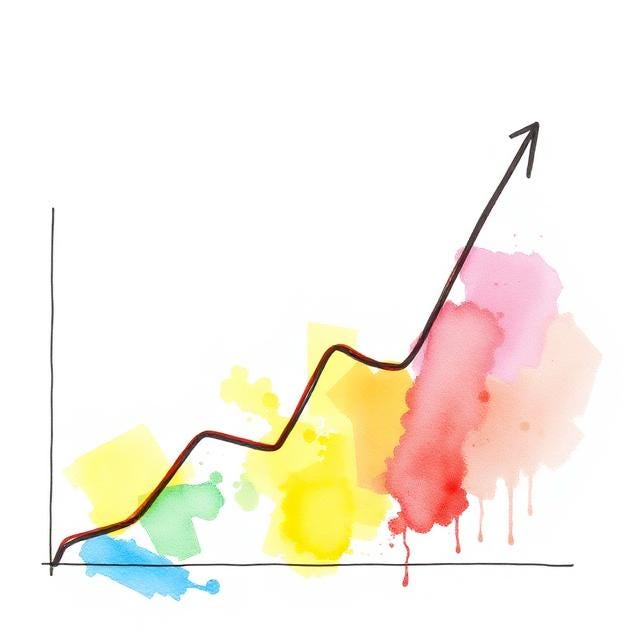
I’m not saying we should scrap pensions. Of course we need a fair, livable state pension - and in an ageing population, that is inevitably going to be expensive. But there is no reason at all that the state pension needs to rise and rise and rise at an inexorable, unstoppable pace.
The Triple Lock, for the avoidance of all doubt, is the policy that the State Pension will increase by whatever is highest out of wage growth, inflation, or 2.5%. So if workers wages stagnate, pensions will go up. If workers wages fall while prices in the shops soar, pensions will go up (making inflation worse).
Quite literally, we ain’t all in together.
Removing the Triple Lock would save the government £15 billion a year by 2030. Money that can be spent on public services. Incidentally, local councils currently spend around £20 billion a year on social care (a spiralling cost which is bankrupting many local councils, the reason council tax is soaring while bin collections get less frequent and roads fall into disrepair). Scrapping the Triple Lock would go some way towards resolving the social care crisis.
Stuck in the middle
Reform tells us that there are so many scroungers that they can actually cut tax on working people. The Greens tell us there are so many billionaires that they can do the same.
Neither of those things is true. The truth is, if we want high quality public services, ordinary working Brits must foot the bill. But that will present savings for individuals in other ways: a health service that doesn’t leave people dependent on private healthcare, roads that don’t damage your tyres, you won’t need to fork out for taxis because the buses and trains will show up on time.
Workers are not going to love paying more, and pensioners will not be happy about getting less - but good government isn’t about making everyone like you.
If the government can increasing revenue and decrease spending, they will go someway to lowering the national debt. If you lower the debt, you stabilise the economy and improve public services - and importantly - you free up space to borrow for infrastructure. That will drive exactly the sort of economic growth that leads to higher wages. Higher wages solve every problem: individuals can save for a better retirement, and the government isn’t spending billions on bringing the price of energy bills down by 20p.
You make these unpopular decisions by offering the public a new deal. The current deal - kind of low taxes and pretty shitty public services - is the worst of both worlds. So a new deal must give workers a better quality of life, higher wages, and better public services; while pensioners get social care that won’t bankrupt them.
It’s time to grow up and pick a lane: we can be Texas, or we can be Denmark. The fantasy of living in both is what’s bankrupting us.
😮