

Trump’s long and rambling press conference is a tradition after he makes some bonkers move that upends the international order.
His invasion of Venezuela and capture of Maduro was no exception.
But there was something notable in what he said. Drugs - ostensibly the reason for the operation - came up five times. Oil came up 27 times.
Post-industrial revolution, oil ran the world. But that’s changing. In the digital revolution, there are some assets you can pull out from the ground that are more valuable than oil.
China has figured this out. Oil is old news: they want cables and rare earths.
Underground cables
Possibly the biggest vulnerability to the West - that we almost never speak or hear about - is our reliance on cables.
Close to 99% of all intercontinental data travels through a physical network of undersea cables. Our ability to access and share information with other countries via the internet depends on these cables. These cables transmit WhatsApp messages, emails, video calls - as well as facilitating trillions of dollars worth of financial transactions every single day.
If you’re a bad actor looking to disrupt Britain’s place in the world, how do you carry out a mission to disrupt one of these cables? What sort of sophisticated military equipment would you need?
The answer: a boat with an anchor. 80% of faults affecting these crucial cables arise from a boat accidentally dragging an anchor over them. If you are an adversary, you just need to drag an anchor around until it ‘accidentally’ hits and damages a wire.
It may sound ridiculous, but it’s happening. In November 2024, a Chinese boat dragged its anchor around the Baltic Sea floor for 330 kilometres, damaging multiple undersea cables. China allowed the Swedish authorities to board the vessel and investigate, but they couldn’t conclusively prove the behaviour was anything other than an accident.

Of course, triggering a significant internet outage would require coordinated action to take out several cables all at once. Does that really sound so hard, though?
Knowing how important these cables are - we should be keeping Beijing and Moscow well away, right?
Well, apparently not. The government is poised to approve a giant mega-embassy for China that has a sprawling basement with 208 ‘secret’ rooms.
One of those rooms is an underground chamber, fitted with air extraction facilities - the kind you’d use in a data centre or server room.
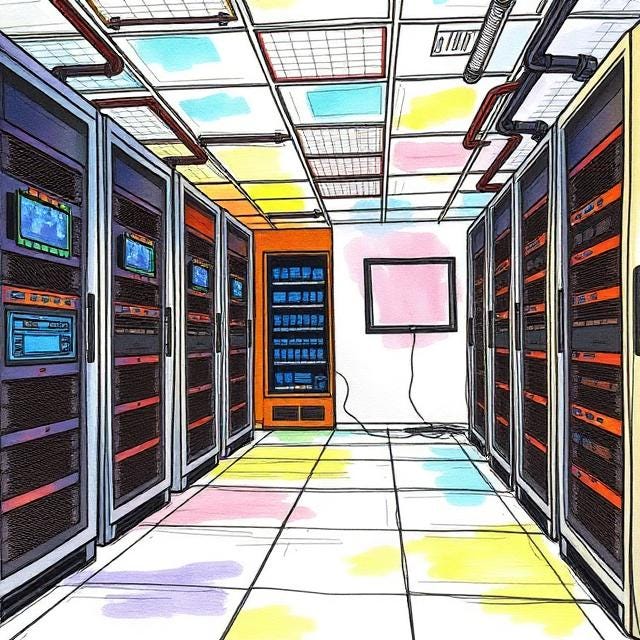
This underground chamber is 100cm from a vital fibre optic cable. The cable carries data to and from Canary Wharf and the City of London.
With such proximity to a stream of sensitive and vital information, China could interfere in countless ways: tapping them, disrupting them, or severing them altogether and causing chaos.
The decision to just hand over this access is a bizarre and completely unnecessary capitulation to China. There is a non-zero chance that China created and released the COVID-19 coronavirus in 2020 (either deliberately or accidentally). We haven’t ruled that out.
It beggars belief that the government has ruled out the possibility that China might have nefarious reasons for wanting a secret underground chamber inches from our data cables.
Rare earths
17 elements are classed as ‘rare earths’: vital components for much of our modern technology. You need rare earths to power smartphones, electric vehicles, fibre optic and wind turbines - not to mention Tomahawks, satellites and F35s.
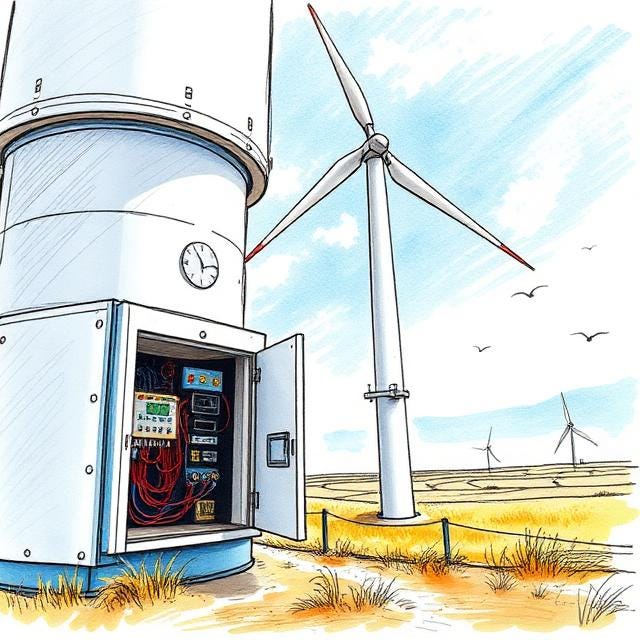
Yet nearly all rare earths are mined in China. 70% of US imports of rare earths came from China, and 90% of global rare earths are refined there.
There’s a reason countries ban monopolies: when one person controls a supply chain, they can easily get up to no good.
China uses their monopoly for political purposes. When the Japanese Prime Minister made remarks about the contested state of Taiwan, China retaliated by restricting Japan’s access to rare earths. They did the same thing when Trump was threatening tariffs.
When Russia invaded Ukraine, Germany was hesitant to act against them because Russia controlled much of their oil supplies.
China will eventually pick a moment to strike and invade Taiwan. They might feel empowered by Trump’s attempted landgrabs of Venezuela and Greenland, or if they see a Russia/Ukraine peace deal that’s favourable to Putin.
If China does invade, how able will we in Britain feel to intervene if they control our vital supply lines? Or if they have access to our vital information lines?
Britain’s historical power was in no small part thanks to its literal moat: being surrounded by water, coupled with a powerful navy, meant the country was largely protected from invasion. But in 2025, Britain is surprisingly vulnerable to bad actors. You don’t have to do very much to make a big ripple. The cyberattack on Jaguar Land Rover - one car company - cost the British economy £1.9bn last year.
We’re giving China far too much potential to exploit our vulnerabilities: access to underground cables, control of a vital supply chain. They’re smart, we need to smarten up.
Very interesting and abit scary